|
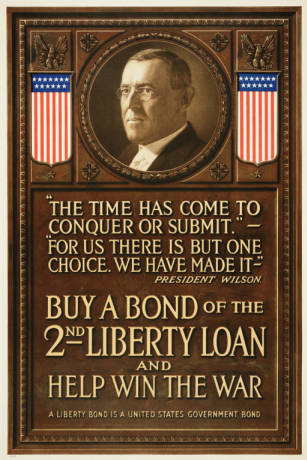
| Just a few of the 4 MILLION ROUNDS OF ENDFIELD .303 BRITISH ROUNDS FOUND IN THE HOLD OF THE LUSITANIA. We were lied to in order that we would go to war with a foreign power. | Remember that regarding Iraq and other countries we've invaded |
The Lusitania, Woodrow Wilson, and the Deceptions that Dragged
America into World War I
This is a long article. But World War I – which was the first global war,
and claimed as many as 65 million lives – has nearly been forgotten about. This
article contains many suppressed facts, and I hope you come away from it with a
better understanding of how the present connects to the past.
As discussions crop up of a Third World War possibly arising from tensions in
the Middle East or Ukraine, it is apt to examine the
First World War,
whose 100th anniversary falls this year. America’s entanglement in that war,
like so many others, was engineered through a false flag.
In 1915, Britain was at war with Germany. The United States was still
neutral. On May 7, the
Lusitania, a British ocean liner en route from
America to England, was sunk by a German submarine some 12 miles off Ireland’s
southern coast. There were 764 survivors, but nearly 1,200 people, including 128
Americans, lost their lives. The
Lusitania – which had been the world’s
largest ship when launched in 1906 – went down in just 18 minutes after a single
torpedo hit. Survivors reported there had been two explosions – a smaller one
followed moments later by an enormous one. This was affirmed by the log of the
U-20, the submarine which sank her.
The tragedy was portrayed to the public as the wanton slaughter of women and
children. It became the subject of a relentless propaganda campaign, including a
fabricated claim that German children were given a holiday from school to
celebrate the sinking. The
Lusitania was the most important in a series
of pretexts used to generate the eventual U.S. declaration of war on
Germany.


 Understanding Germany’s U-boat Policies
After the war began in 1914, Britain immediately began a naval blockade of
Germany, intercepting merchant ships and strewing the North Sea with mines.
Since the British classified even foodstuffs as “contraband,” the Germans had to
ration food. By all estimates, several hundred thousand people ultimately died
of starvation due to the blockade.
Germany’s decision to blockade Britain was retaliatory. Since the British
possessed naval superiority, Germany’s only means of blockade was through its
U-boat force. Although the U.S. media characterized sub warfare as barbaric,
British mines were just as lethal as German torpedoes. Furthermore, while the
Germans normally only targeted only ships of belligerent nations (sparing
neutrals), the British blockade was indiscriminate, barring neutral as well as
belligerent ships.
In the war’s early stages, U-boats observed the “Cruiser Rules” that had been
established under international law (e.g., at the Hague Conventions). Before
sinking a merchant vessel, they would surface, and allow the ship’s crew to
evacuate in lifeboats.
This changed, however, thanks to new rules unilaterally instituted by the
British Admiralty, then headed by Winston Churchill. The British began arming
their merchant ships. As Colin Simpson notes in
The Lusitania:
From October 1914 onward a steady stream of inflammatory orders were issued
to the masters of British merchant ships. It was made an offense to obey a
U-boat’s orders to halt. Instead masters must immediately engage the enemy,
either with their armament if they possessed it, or by ramming if they did not.
Any master who surrendered his ship was to be prosecuted, and several
were.1
One British merchantman was paid a bounty of $3,300 for ramming a submarine.
Thus both a carrot and stick goaded merchantmen to engage subs.
The Germans faced an inescapable dilemma. As warships, subs were fragile. One
shot from even a low-caliber cannon could sink a U-boat. By the time of the
Lusitania incident, merchantmen had sunk several. Walter Schweiger,
commander of the sub that sank the
Lusitania, had already narrowly
escaped an attempted ramming. Although U-boat captains continued to exercise
discretion, they were usually unwilling to surface and risk destruction by
observing the Cruiser Rules which Britain herself had abandoned.

 Above: Schweiger; Churchill as head of Admiralty
Why Churchill Broke the Rules
Above: Schweiger; Churchill as head of Admiralty
Why Churchill Broke the Rules
Prior to the
Lusitania’s sinking, Winston Churchill wrote to Walter
Runciman, President of the Board of Trade, that it is “most important to attract
neutral shipping to our shores, in the hope especially of embroiling the United
States with Germany.”
2 In his postwar book
The World Crisis,
Churchill wrote: “The maneuver which brings an ally into the field is as
serviceable as that which wins a great battle.”
3
The first British counter-move, made on my responsibility in 1915 was to arm
British merchantmen to the greatest possible extent with guns of sufficient
power to deter the U-boat from surface attack. . . . As the U-boats were forced
by the progressive arming of the British Mercantile Marine to rely increasingly
on under-water attacks, they encountered a new set of dangers. The submerged
U-boat with its defective vision ran the greatest risk of mistaking neutral for
British vessels and of drowning neutral crews, and thus of embroiling Germany
with other great Powers.4
To Churchill’s disappointment, however, U-boat captains scrupulously avoided
attacking American ships. The next best thing, therefore, was to have a
British ship sunk with
American passengers on board. Churchill
had Commander Joseph Kenworthy, of the Political Section of Naval Intelligence,
submit a report on what the political results would be of such a sinking. The
Lusitania became the fulfillment of Churchill’s objectives. This false
flag involved coordination on both sides of the Atlantic. The political
background requires us to digress from the
Lusitania momentarily.
The Bankers’ Handmaiden
Woodrow Wilson had been elected President in 1912. Given that the former
Princeton professor had only one year of political experience (as governor of
New Jersey), this was a miracle that only the American “Establishment” (less
politely called
Illuminati) could have pulled off. Among Wilson’s top
financial angels were munitions manufacturer Cleveland Dodge (National City
Bank/Rockefellers) and banker Jacob Schiff (Kuhn, Loeb Bank/Rothschilds).
“Wall Street” Republicans had ruled the White House for 16 years, but with a
vociferous reform movement growing within the party, under the auspices of men
like Senator Robert La Follette and Congressman Charles Lindbergh, Sr., the
bankers were content to let the Republican Party cool off and put their trust in
Wilson. With J. P. Morgan’s backing, former Republican President Teddy Roosevelt
was trotted out as the candidate of the short-lived “Bull Moose” Party. His
candidacy split Republican votes between himself and incumbent President William
Howard Taft. This allowed Wilson, the Democratic Party candidate, to win the
election with only 42 percent of the popular vote. Since Roosevelt spoke loudly
(though with tongue in cheek) about “reform,” he also helped derail La
Follette’s attempt to secure the Republican nomination.
According to Curtis Dall (President Franklin D. Roosevelt’s son-in-law),
Wilson pledged to banker Bernard Baruch to do four things if elected
President:
- lend an ear to advice on who should occupy his cabinet;
- support creation of a central bank (i.e., the Federal Reserve);
- support creation of the income tax;
- lend an ear to advice should war erupt in Europe.5
How swiftly Wilson fulfilled these pledges! These were still the days, of
course, before the
Council
on Foreign Relations – chief recruiting ground for Presidential cabinets
over the last century – existed. Wilson’s cabinet was said to have been
handpicked by “Colonel” Edward Mandell House, CFR founder. He was a Wall Street
front man who lived in the White House, wielding such influence that
Harper’s Weekly called him “Assistant President House.” (His role
paralleled that of Harry Hopkins, who later lived in the White House during
Franklin D. Roosevelt’s Presidency, acting as the liaison to Bernard
Baruch.)

 Above: Wilson & House; Bernard Baruch
1913 – Wilson’s first year in office – saw establishment of both the Federal
Reserve and income tax (the latter was ratified the month before his
inauguration). The
Federal
Reserve gave the bankers the authority to set interest rates (and thus
toggle the stock market at will) and to create money from nothing, which would
flow into their multinational banks and corporations. Colonel House’s official
biographer, Charles Seymour (Skull & Bones), called House the “unseen
guardian angel” of the Federal Reserve Act.
6
Income tax (which the banksters had no intention of substantially paying
themselves) gave them a lien on Americans’ earning power, to pay for (among
other things) the interest the bankers would collect on loans to the government.
Both the original central bank legislation, as well as the income tax amendment,
were introduced in Congress by Senator Nelson Aldrich, whose daughter married
John D. Rockefeller, Jr.; he was the maternal grandfather of CFR chairman David
Rockefeller.
Once the Federal Reserve and income tax were in place, only one thing was
still needed:
a significant reason for America to borrow. In June 1914,
six months after the Federal Reserve Act passed, Archduke Franz Ferdinand was
assassinated, triggering the start of World War I. America participated; as a
result, our national debt grew from a manageable $1 billion to $25 billion.
The war would not only yield billions in profits for the Illuminati, but
would, with the League of Nations, incipiently fulfill their dream of a world
government. But how to entangle America in the war? Here the interests of the
British and American Establishments coincided in the
Lusitania’s
sinking.
A False Flag Foreknown
Our ambassador to England under Wilson was the militantly pro-British Walter
Hines Page. During his tenure, he received a private annual stipend of $25,000
(well over a half-million in today’s dollars) from munitions magnate Cleveland
Dodge, so that he could live in “proper ambassadorial style.”
7 (In
realpolitik, this is normally called a “bribe.”)
On May 2, 1915 – five days before the
Lusitania was sunk – Page
wrote to his son: “If a British liner full of American passengers be blown up,
what will Uncle Sam do? That’s what’s going to happen.”
8

Edward
Mandell House was in England at this time as Wilson’s emissary. On the morning
of the fateful 7th, House met with Edward Grey (left), Britain’s foreign
minister. House recorded: “We spoke of the probability of an ocean liner being
sunk, and I told him if this were done, a flame of indignation would sweep
across America, which would in itself probably carry us into the
war.”
9 Later that day, House and Grey met with King George V at
Buckingham Palace. House wrote: “We fell to talking, strangely enough, of the
probability of Germany sinking a trans-Atlantic liner. . . . He [the king] said,
‘Suppose they should sink the
Lusitania, with American passengers on
board?’”
10 (These quotes appear in Houses’s official biography,
The Intimate Papers of Colonel House.)
These remarks betrayed foreknowledge that cannot be dismissed as coincidences
chanced upon in casual conversation.
That evening, a splendid dinner was given honoring House; numerous British
dignitaries attended, including Grey, and – at House’s request – Lord Mersey,
the Wreck Commissioner, who would later oversee the inquiry regarding the
Lusitania. During this dinner the news arrived of the great ship’s
sinking. House announced to the assembled guests that America would enter the
war within the month.
The following day, Ambassador Page cabled Wilson: “The freely expressed
universal opinion is that the United States must declare war or forfeit European
respect. So far as I know this opinion is universal. If the U.S. does come in,
the moral and physical effect will be to bring peace quickly and to give the
U.S. a great influence in ending the war and in so reorganizing the world as to
prevent its recurrence. . . .”
11 This remarkable cablegram reveals
that the postwar restructuring of the world – which really occurred four years
later at the Paris Peace Conference, where Wilson proposed the League of Nations
– was envisioned from the outset. In Berlin, without even waiting for
instructions, the American embassy began preparing to shut down.
As we will, see however, the Wilson-House-Page clique had overestimated
Americans’ willingness to go to war over the
Lusitania. But first: How
was this false flag engineered? How did British and American officials know, in
advance, that a submarine would likely target the ship? And that the attack
would result in its being “blown up” and sunk? Why did the 32,000-ton ship
vanish beneath the waves in just 18 minutes?
From Luxury Liner to Warship
The Cunard Line built the
Lusitania and her sister ship
Mauretania with loans from the British government, which also bestowed
annual subsidies on Cunard for operational costs. In return for this, the
Admiralty required that the ships be designed as auxiliary cruisers, available
in wartime.
In February 1913, Winston Churchill informed Cunard chairman Alfred Booth
that war with Germany was expected, estimating the outbreak as September
1914.
12 (He was only off by a month.) In accordance with
instructions, the
Lusitania, like other British liners, was refitted to
carry guns. There is dispute over whether she actually had cannon, but some
testimony exists that she did, concealed on her lowest deck, where passengers
were not allowed. The
Lusitania was listed as an auxiliary cruiser in
Jane’s Fighting Ships, a copy of which U-boat commanders kept on board
to identify targets.
More importantly, the British used the
Lusitania to ferry heavy
loads of munitions from America to Britain. Since the U.S. government disallowed
shipment of most munitions on passenger ships, the British got around this by
submitting falsified manifests for the
Lusitania. Wilson had appointed
Dudley Field Malone as collector of customs for the port of New York. Malone
rubber-stamped the manifests, knowing full well what was going on.
As submarine warfare increased, the situation became too much for the
Lusitania’s captain, David Dow, who informed Cunard he could no longer
mix carrying passengers with munitions. As a result, for the final voyage he was
replaced by William Turner.
On that fateful crossing, the
Lusitania was transporting six million
rifle cartridges and more than 50 tons of shrapnel shells. But there were other
items that provide possible clues to the mysterious second explosion that sank
the ship after a single torpedo hit. One was guncotton, an explosive the British
used in their mines (it was called gun“cotton” because in its manufacture, the
chemicals were soaked in cotton).
In the U.S. Justice Department’s archives is an affidavit signed by Dr. E. W.
Ritter von Rettegh, a chemist employed by Captain Guy Gaunt, the British naval
attaché in Washington. Ritter von Rettegh stated that Gaunt called him to his
office on April 26, 1915, and asked what the effect would be of sea water coming
into contact with guncotton. The chemist explained that there were two types of
gun cotton – trinitro cellulose, which sea water would not affect, and
pyroxyline, which sea water could cause to suddenly explode, as a result of
chemical changes that he explained in technical detail.
13
The following day, Gaunt visited the Du Pont munitions plant in Christfield,
New Jersey, and Du Pont thereupon shipped tons of pyroxyline, packaged in
burlap, to the Cunard wharf in New York City, where it was loaded onto the
Lusitania. It quite evidently accounts for the item on the ship’s
manifest of 3,813 40-pound containers of “cheese,” which were shipped along with
696 containers of “butter.” That these packages were not butter and cheese is
clear: they were not shipped in refrigerated compartments; their destination was
listed as the Royal Navy’s Weapons Testing Establishment; and no one filed an
insurance claim for the lost “butter and cheese.”
14

 Above: Captain Turner (left); Guy Gaunt
Placing thousands of burlap containers of guncotton in the
Lusitania’s hold would sharply increase the chances that a torpedo
would make the ship – as Ambassador Page predicted – “be blown up.” Considering
that the ship also carried tons of shrapnel shells and cartridges, the potential
for devastation became even worse. One of the
Lusitania’s survivors,
Joseph Marichal, stated he had distinctly heard cartridges exploding, a sound he
was familiar with as a former officer in the French army.
While Captain Gaunt’s interview with Dr. Ritter von Rettegh might have an
innocent explanation, it is noteworthy that after submitting his affidavit, the
chemist was arrested and charged with making “utterances prejudicial to the
peace of the Nation.” He was tried
in camera and sentenced to prison.
Gaunt, on the other hand, was promoted to rear-admiral and knighted.
Other mysterious items appeared on the
Lusitania’s manifest. One was
323 bales of “furs.” The furs originated from depots employed by Du Pont; the
cargo was destined for the British company of B. F. Babcock, which was never
involved in importing furs, but did import cotton used in making
guncotton.
15 Like the butter and cheese, no one ever filed an
insurance claim on the “furs.”
Patrick O’Sullivan, in
The Lusitania: Unravelling the Mysteries,
advanced a theory that the explosion was touched off by aluminum powder, a
highly combustible explosive; 46 tons were aboard, destined for the Woolrich
Arsenal. Also stored with the cargo were 18 cases of percussion fuses consisting
of mercury fulminate, which a torpedo could also have caused to explode.
Regardless of which item ignited first, the massive detonation which sank the
ship did originate in the forward area holding her munitions.
German Warnings


The Germans had little choice but to try to stop the
Lusitania’s
munitions from reaching England. But neither did they wish to provoke America by
harming its citizens. On April 22, they ordered a conspicuous warning placed in
fifty newspapers near the Cunard sailing notices, alerting potential passengers
to the danger. This would have given the public a week’s notice. However, a
State Department officer ordered the warning’s publication suppressed. On April
26, George Viereck, representing the Germans, obtained an audience with
Secretary of State William Jennings Bryan. Bryan immediately cleared the notice
for publication, and also urged President Wilson to warn Americans. Wilson,
however, always on the bankers’ puppet strings, declined to do so.
Setting the Trap
There was no guarantee, of course, that this false flag would occur, since it
depended on a U-boat commander’s unpredictable actions. There were, however,
probabilities. The British had broken Germany’s naval codes. While they could
not pinpoint a sub’s exact location, intercepted radio signals provided abundant
information about U-boats’ activities, destinations and general areas of
operation. They were also well aware of the U-20’s presence in the Irish Sea
that May, from reports of the sub sinking vessels.
On May 5 – two days before the tragedy – Winston Churchill met with Admiral
Fisher (First Sea Lord), Admiral Oliver (Chief of Naval Staff), and Commander
Joseph Kenworthy (Naval Intelligence), in the Admiralty’s map room. Here a great
grid showed locations of British ships and hostile ships, marked with pins. The
map showed the
Lusitania and U-20 on a collision course. What was said
is unrecorded, but Kenworthy wrote in his postwar book
The Freedom of the
Seas: “The
Lusitania was deliberately sent at considerably reduced
speed into an area where a U-boat was known to be waiting and with her escorts
withdrawn.” However, the publisher deleted the word “deliberately” at the
Admiralty’s insistence.
16

 Above: Churchill with Admiral Fisher; Kenworthy
The Admiralty could have safeguarded the
Lusitania by rerouting her
around the north of Ireland, where it knew no U-boats were operating. Especially
damning was the failure to provide escorts. On previous voyages, destroyers had
accompanied the
Lusitania where submarines threats existed. On May 7,
however, no destroyers were designated to protect her, even though four were
lying idle in the nearby port of Milford Haven,
17 and despite the
U-20’s known presence in the south Irish Sea, where it had sunk two steamers the
previous day. The only warship assigned to meet the
Lusitania was an
aging cruiser, the
Juno. However, even the
Juno was ordered
back to the port of Queenstown on Ireland’s southern coast – on the
justification that she was vulnerable to submarine attack!
Yet the
Lusitania received no instructions to divert to Queenstown.
On the evening of the 6th, Captain Turner assured his increasingly nervous
passengers that, on entering the war zone the next day, they would be securely
in the Royal Navy’s care. But when dawn broke, the Royal Navy was nowhere in
sight. Turner was alone in the Irish Sea with a U-boat on the prowl. It is a
matter of record that there were wireless communications with the
Lusitania, but these messages’
transcripts have always been
missing from the Admiralty’s files. Some suspect Turner requested permission to
reroute the ship and was refused. Vice-Admiral Henry Coke, commanding defenses
in this sector from his Queenstown headquarters, requested permission from the
Admiralty to divert the
Lusitania. He received no decision.
 Left: the U-20
Patrick Beesly was considered the leading authority on the history of British
Naval Intelligence, in which he was long an officer. In his book
Room
40, Beesly wrote:
Nothing, absolutely nothing was done to ensure the liner’s safe
arrival . . . . I am reluctantly driven to the conclusion that there
was a conspiracy deliberately to put the Lusitania at risk in
the hopes that even an abortive attack on her would bring the United States into
the war. Such a conspiracy could not have been put into effect without Winston
Churchill’s express permission and approval.18
The Cover-up
As soon as Vice-Admiral Coke received the report of the
Lusitania’s
SOS, he ordered the
Juno to its rescue. The cruiser was in sight of the
survivors in the water when it was recalled to Queenstown on the Admiralty’s
orders – the pretext being that it, too, might be sunk by the submarine (which
was now gone). Although this concern was legitimate, it undoubtedly cost
considerable loss of life, for it was much longer after the
Juno’s
recall that other rescue craft – fishing smacks and patrol boats – began
arriving.
Hundreds of bodies washed up on the Irish shore or were recovered by vessels.
Another instruction the Admiralty sent Coke was “to ensure that bodies selected
for the inquest had not been killed or mutilated by means which we do not wish
to be made public.”
19 What “means” could this have referred to, other
than mutilation from the ship’s munitions?

Orders were also given to try to halt the inquest held by the local coroner,
John Horgan, for fear that the Irish – whose rapport with England was tenuous –
might render an unfavorable verdict. (This fear proved unfounded.)

In Britain, a formal inquiry into the sinking was to be held before Lord
Mersey, who had also overseen the
Titanic
inquiry. However, well before it got underway, the Admiralty resolved to
scapegoat the ship’s captain, William Turner:
• Within a week of the sinking, Richard Webb, director of the Admiralty’s
Trade Division, issued a report which said of Turner that “one is forced to
conclude that he is either utterly incompetent, or that he had been got at by
the Germans.”
20
• Admiral Lord Fisher concurred, saying that Turner “is not a fool but a
knave. I feel absolutely certain that Captain Turner of the
Lusitania
is a scoundrel and been bribed. . . . I hope that Captain Turner will be
arrested immediately after the Inquiry,
whatever the verdict or finding
may be.”
21 And, he added, in his notations on Webb’s report: “Ought
not Lord Mersey to get a hint?”
22
• Churchill responded that “we shall pursue the Captain without
check.”
23
• Webb then wrote Lord Mersey: “I am directed by the Board of Admiralty to
inform you that it is considered politically expedient that Captain Turner the
master of the
Lusitania be most prominently blamed for the
disaster.”
24
Thus, in violation of the traditions of justice, Lord Mersey was asked to
render a verdict before the inquiry even began. The request came from the men
responsible for denying the
Lusitania protection.
Comparison to
Pearl
Harbor is apt. In that event, President Franklin D. Roosevelt and select
officials had complete foreknowledge of the attack, which they denied to the
commanders in Hawaii, Admiral Kimmel and General Short. Roosevelt then appointed
an investigative body, the Roberts Commission, which laid all blame on Kimmel
and Short. Roosevelt thus followed the example set 26 years earlier by his
distant cousin Churchill. It bears mentioning that when the
Lusitania
sank, Franklin D. Roosevelt was Assistant Secretary of the Navy, the same
position held by another of his cousins, Theodore Roosevelt, when the USS
Maine exploded in 1898, triggering the
Spanish-American
War.

At the inquiry, held partly
in camera, Lord Mersey
(left) quashed all evidence of the
Lusitania’s munitions. Captain
Turner was never even asked what his cargo was. Mersey relied on a letter from
Dudley Field Malone saying items on the ship’s manifest “were permitted to be
shipped on passenger steamers under the laws of the United States.” Malone’s
letter was unsworn (he declined to make a statement under oath) and referred
only to the first one-page manifest, not its 24-page supplement.
Mersey’s report concluded that “the loss of the ship and lives was due to
damage caused to the said ship by torpedoes fired by a submarine of German
nationality whereby the ship sank.” However, Mersey was unwilling to crucify
Captain Turner. There seem to have been two factors in this: (1) no substantive
evidence was produced in court incriminating Turner, an able and veteran seaman;
and (2) by the time of the verdict, Churchill had been dismissed from the
Admiralty due to the disastrous Dardanelles (Gallipoli) campaign, so there was
no longer any need to placate him.
Following the hearing, Mersey waived his fee for his work on it, asked to be
excused from further justice duties, and told his children: “The
Lusitania case was a damned dirty business.”
25
In the United States, a separate hearing on the
Lusitania was held
much later under Judge Julius Mayer. The nature of the ship’s cargo had become
increasingly known. Senator Robert La Follette publicly stated:
Four days before the Lusitania sailed, President Wilson was warned
in person by Secretary of State Bryan that the Lusitania had 6,000,000
rounds of ammunition on board, besides explosives; and that passengers who
proposed to sail on that vessel were sailing in violation of a statute of this
country, that no passengers shall travel upon a railroad train or sail upon a
vessel that carries dangerous explosives.26
American families who had lost loved ones sued the Cunard Line for allowing
passengers to sail with contraband munitions. Dudley Field Malone was named as
codefendant and, if convicted, could have been indicted for involuntary
manslaughter. However, no evidence concerning the illicit cargo was heard at the
hearing. Judge Mayer, relying in part on Mersey’s findings, ruled in favor of
Cunard and against the claimants.
The Mayer hearing was missing a critical piece of evidence: the
Lusitania’s original manifest. President Wilson personally sealed it in
an envelope, marked it “Only to be opened by the President of the United
States,” and had it hidden in the archives of the Treasury Department (which
oversees the customs service). We know this because President Franklin D.
Roosevelt later had it retrieved, and it turned up among his papers. (To see it,
click
here.)
The False Flag Falters
Although Colonel House and Ambassador Page had seemed confident the U.S.
would declare war over the
Lusitania, the American people didn’t share
their zeal. They were upset by the sinking, but not enough to send their sons to
European battlefields.
The case for war was baseless:
• That the British were the first to violate the “Cruiser Rules” was not lost
on everyone, especially German-Americans;
• The effort to conceal the truth about the
Lusitania’s munitions
was only partially successful; many recognized that the British were using women
and children to protect arms shipments – as State Department solicitor Cone
Johnson put it, mixing “babies and bullets.”
• Americans wishing to travel to England safely could easily do so by using
U.S. ships or those of other neutral countries. Americans boarding British ships
traveled at their own risk; they could no more claim immunity from German attack
than an American who chose to ride on a British gun carriage on a battleground
in France.
With the nation’s mood insufficient for war, Wilson and House began what
would be a long series of diplomatic jousts calculated to provoke Germany into
rupturing relations. After the
Lusitania, Wilson demanded that Germany
halt submarine warfare. The Germans replied that the
Lusitania was an
auxiliary cruiser carrying contraband munitions, and that Britain’s Admiralty
had ordered all merchantmen to fire upon or ram surfaced submarines (they
provided Wilson with copies of the British orders, which a U-boat crew had found
on a captured vessel). Wilson’s reply denied the charges, asserting the United
States had “enforced its statues with scrupulous vigilance through its regularly
constituted officials and it is able therefore to assure the Imperial German
Government that it has been misinformed.”
Secretary of State William Jennings Bryan refused to sign this reply. He had
long striven with the President over the latter’s double-standard policy:
tolerating England’s naval blockade of Germany and violations of “Cruiser
Rules,” while excoriating Germany for reciprocation. Now Bryan was being asked
to sign a note that was glaringly false – for Dudley Field Malone had already
told Wilson that “practically all of her [the
Lusitania’s] cargo was
contraband of some kind.”
27 Bryan chose to resign, for which the
press excoriated him; the
New York World accused him of “unspeakable
treachery.”


 Left to right: Bryan; cartoon depicts Kaiser applauding Bryan; Dudley
Field Malone. Interestingly, Malone would oppose Bryan again as an attorney
assisting Clarence Darrow in the 1925 Scopes Trial;
and in 1944 he portrayed Winston Churchill in
Left to right: Bryan; cartoon depicts Kaiser applauding Bryan; Dudley
Field Malone. Interestingly, Malone would oppose Bryan again as an attorney
assisting Clarence Darrow in the 1925 Scopes Trial;
and in 1944 he portrayed Winston Churchill in Mission to Moscow,
perhaps the most flagrantly pro-Communist movie Hollywood ever made. It
would probably be reasonable to say Malone was “connected.”
Bryan’s resignation was gold to the
Illuminati, for he possessed
something they couldn’t stomach: integrity. He’d been made Secretary of State in
return for helping secure Wilson’s nomination at the 1912 Democratic Convention.
In his place was appointed Robert Lansing, a pro-war State Department legal
adviser who’d already proven useful in circumnavigating Bryan. Lansing’s
nephews, Allen Dulles and John Foster Dulles, would become two of the most
powerful insiders of twentieth century politics.
Newspapers and books began stirring hysteria about the imminence of a German
invasion. The film
The Battle Cry of Peace depicted a Hun-like army
devastating New York City and Washington. A well-financed national
“preparedness” movement was birthed; J. P. Morgan’s daughter served as treasurer
for the women’s section of the “Movement for National Preparedness.”

 Above: foreign invaders assault the virtuous maidens of New York City
in
Above: foreign invaders assault the virtuous maidens of New York City
in The Battle Cry of Peace
(1915)
Wilson meanwhile awaited another pretext for war, but the Germans were
careful not to give him one, having no desire to see American troops swelling
Allied ranks. They ordered U-boat captains not to torpedo another passenger ship
without warning. However, sooner or later, a mistake was bound to occur. On
March 24, 1916 in the English Channel, a U-boat commander, looking through his
periscope, mistook an odd-looking ship for a minelayer, and fired a torpedo. The
ship turned out to be a French passenger steamer, the
Sussex. The
damaged ship was towed to port; there were Americans on board; none were killed,
but four were injured.
Wilson and his controllers hoped they now had their pretext for war. The
President sent a hostile ultimatum to the Germans, demanding they halt “present
methods” of submarine warfare (go back to “Cruiser Rules”) or face a rupture in
relations. The Germans wisely responded that they would comply,
provided the United States require Britain to likewise observe
international law.
Once again, Germany had parried war – and Wilson now had to focus on
reelection.
The 1916 Elections
Despite the anti-Germany media campaign, Americans remained overwhelmingly
opposed to entering the European war. Wilson’s belligerence had not been lost on
many, and as a result, the Republican nominee – Charles Evan Hughes – held a
large lead in polls.
The American Establishment was very satisfied with the services the obedient
Wilson had provided, and preferred him to the untried Hughes (similar to the
Obama-Romney paradigm of 2012). Hughes’s public relations director
Myron Fagan later became
a pioneering exposer of the CFR and Illuminati.

 Hughes
and Fagan
Hughes
and Fagan
To ensure Wilson’s reelection, Teddy Roosevelt was brought out to do just
what he’d done in 1912: betray his own party.
28 Roosevelt traveled
the country making militant speeches, attacking Germany and denouncing pacifists
as “mollycoddles.” These speeches greatly annoyed Hughes, as the public started
believing, by proxy, that Hughes was pro-war. Taking the cue, the Democrats made
Wilson’s campaign slogan “He kept us out of war,” even though Wilson had done
everything possible to get us into it. The ploys worked. Hughes’s polls lead
evaporated. Wilson won one of the closest Presidential elections in history, and
did so, ironically, because voters wanted to avoid war.

 The Zimmerman Note
Once reelected, Wilson shed the “peace” pretenses, and again sought
justification for war. After Germany – pressing for victory to end the gruesome
conflict – announced resumption of unrestricted submarine warfare, Wilson
terminated relations, claiming Germany had broken its pledge. (He ignored that
the pledge had been
conditional on Britain’s reciprocal observance of
international law, something the British government never did.)
But Wilson still needed another provocation to push the war button.
Ever-reliable British intelligence produced just what he needed: their decoding
of the “Zimmerman telegram.”

Arthur Zimmerman (left) was Germany’s foreign
secretary. In January 1917 he had cabled the German ambassador in Mexico,
instructing him that, if the U.S. entered the war, Germany should propose a
military alliance with Mexico. (Wilson had antagonized Mexico in 1914 by having
U.S. forces occupy Vera Cruz, a move undertaken for the benefit of John D.
Rockefeller’s Standard Oil Company, which had extensive oil interests in
Mexico.) The Germans reasoned that having Mexico as an ally might keep U.S.
troops pinned in North America. The Zimmerman telegram rather naively suggested
that, in the event of victory, Mexico could recover territories previously lost
to the United States: Texas, New Mexico, and Arizona.
Such proposals were actually “par for the course” in the international
deal-making of World War I. For example, Britain had brought Italy into the war
as an ally by promising the Italians new territories. The Mexicans considered
the German proposal quite unrealistic. Nonetheless, when Wilson released the
Zimmerman telegram to the wire services, it was used to renew “German invasion
hysteria.”
On April 2, Wilson convened Congress and requested a declaration of war,
which came four days later. Despite the orchestrated media furor, most Americans
still opposed war, but the financial powers had lined up both parties’ machines;
only a handful of courageous senators and congressmen opposed the
declaration.
 Agenda
of the First World War
Agenda
of the First World War
Americans were told this would be “the war to end all wars.” Though it failed
utterly in this purpose alleged for public consumption, it succeeded in the
purposes that were hidden:
• (1) Europe was restructured in accordance with Illuminati wishes, in
preparation for their “new world order.” As foreign affairs analyst Hilaire du
Berrier noted of World War I: “Three empires, six monarchies and twenty-three
duchies and principalities disappeared because leaders who had a stake in
nationhood had been carried along in a losing tide.“
29 The Illuminati
have always
opposed
any monarchies they could not compromise because kings symbolized
nationhood, and were figures behind whom a nation’s people would rally and
unite. The Illuminati wanted monarchies replaced by “democracy,” because
democracy splinters a nation into parties; a divided country is weaker, and
easier to absorb into world government. This is the “divide and conquer”
principle, and the true reason Wilson said the war would “make the world safe
for democracy.” This catchphrase really meant “make the world safe for
Illuminati,” for the latter knew that in a democracy, wealth combined with media
control would ensure their handpicked candidates received over 50 percent of the
vote. The
Protocols of the Learned Elders of Zion (10:5) called voting
“the instrument which will set us on the throne of the world.”
• (2) The first formal world government – the League of Nations – was
established. It was the 14th of the famous “Fourteen Points” Wilson brought to
the 1919 Paris Peace Conference, which settled the war’s aftermath through the
Versailles Treaty.
To head the American delegation to the conference, Wilson appointed Paul
Warburg – whom he’d also named vice chairman of the Federal Reserve. As his
chief economic advisor, he brought banker Bernard Baruch. And as always, Wilson
was under the eye of the bankers’ front man, Edward Mandell House. Wilson didn’t
invite a single congressman or senator of the Democratic Party to the conference
– only the bankers and their entourage.
Many people think Wilson invented the League, but it originated with House
and the bankers. Ray Stannard Baker, Wilson’s official biographer, said that
“practically nothing – not a single idea in the Covenant of the League – was
original with the President.”
30 Charles Seymour, House’s official
biographer, said Wilson “approved the House draft almost in its entirety, and
his own rewriting of it was practically confined to
phraseology.”
31
Ironically, though the American President proposed the League, the United
States did not join. The U.S. Constitution stipulated that no President could
single-handedly make a treaty; the Senate had to ratify it. The Senate rejected
the Versailles Treaty. Americans had helped win the war, but saw no reason to
join an organization that might infringe on their sovereignty. When news of the
Senate vote reached Paris, the bankers reacted swiftly. They held a series of
meetings, culminating with a dinner at the Majestic Hotel, at which they
resolved to form a new organization in the United States. Its purpose would be
to change the climate of American opinion so that the nation would accept world
government. In 1921, that organization was incorporated in New York City as the
Council on Foreign Relations (CFR).
• (3) The first communist state, the Soviet Union, was birthed from the war’s
chaos. Students of
realpolitik know
the
Illuminati established the USSR. Jacob Schiff, one of Wilson’s financial
angels, ran Kuhn, Loeb – the Rothschilds’ New York banking satellite – along
with Federal Reserve founder Paul Warburg. In 1917 Schiff supplied $20 million
in gold to Leon Trotsky, who sailed from New York with 275 other terrorists. The
Canadians detained Trotsky at Halifax, Nova Scotia, because they knew he
intended to foment revolution in Czarist Russia – our ally in the raging World
War. The Bolsheviks (communists) had promised to pull Russia out of the war if
the revolution succeeded. The Canadians realized what that meant: Germany would
shift its troops from the Eastern to Western front, where they could kill more
British, Canadians, and Americans. But at the bankers’ behest, Wilson personally
intervened, and requested that Canada release Trotsky. The President thus placed
communism’s success above the lives of American soldiers.
When Wilson went to the Paris Peace Conference, the Bolsheviks had taken over
Russia, and one of his assigned tasks was to ensure they kept it. Here is the
long-forgotten sixth of Wilson’s “Fourteen Points”:
VI. The evacuation of all Russian [Soviet] territory and such a settlement of
all questions affecting Russia as will secure the best and freest cooperation of
the other nations of the world in obtaining for her [the communists] an
unhampered and unembarrassed opportunity for the independent determination of
her own political development and national policy and assure her of a sincere
welcome into the society of free nations under institutions of her own choosing;
and, more than a welcome, assistance also of every kind that she may need and
may herself desire. The treatment accorded Russia [the communists] by her sister
nations in the months to come will be the acid test of their good will, of their
comprehension of her needs as distinguished from their own interests, and of
their intelligent and unselfish sympathy.
In his book
The Secret World Government, Czarist General Arthur
Cherep-Spiridovich expressed the opinion that United States entry into the war
was delayed until it was certain Czarist Russia collapsed. (In other words, a
premature U.S. commitment might have bolstered the Czar’s position in Russia,
thwarting the revolution.) Wilson requested the declaration of war just 18 days
after the Czar abdicated.
• (4) The war dramatically advanced the cause of Zionism, whose secret agenda
is to establish, in Jerusalem, the throne of the Antichrist. In 1916, leading
Zionists assured the British government they would bring Wilson and America into
the war
provided that Britain secure the Jewish people a national homeland
in Palestine. The British consented, resulting in the Balfour Declaration,
named for its purported author, Foreign Secretary Arthur Balfour.
This declaration was addressed to Walter Rothschild, a private banker holding
no government position. It pledged the British would “use their best endeavours”
to found a Jewish homeland in Palestine, even though Britain had no position or
authority there whatsoever. Palestine had been under Ottoman (Turkish) control
for 400 years. During World War I, the Ottoman Empire was a German ally; on this
pretext, the British invaded Palestine, though it had little strategic
significance. The famous film
Lawrence of Arabia portrayed the exploits
of T. E. Lawrence, the British officer who led the Arabs against the Turks. The
Arabs were promised Palestine in return for helping Britain defeat the Ottoman
Empire. They – and Lawrence himself – did not know that, behind their backs, the
Balfour Declaration would secretly pledge the land to the Zionists.
The Balfour Declaration was issued on Nov 2, 1917. Five days later, Lenin and
the Bolsheviks overthrew the Provisional Government under Kerensky in Russia.
This assured that Russia would no longer participate in the war. Since this cost
Britain a military ally, it might be argued that Lenin’s Zionist-banker
controllers instructed him to delay his seizure of power until Britain had
formally committed to the Balfour Declaration.
• (5) The war gave the banksters an unprecedented opportunity to loot
America. Prior to the declaration of war, J. P. Morgan & Co. acted as the
official agent for all British munitions purchases. Morgan also loaned over $2
billion to the Allies during this period. Needless to say, Morgan had a vested
interest in Allied victory. After the war declaration, Americans were urged to
fund the war by buying government bonds in a series of “Liberty Loans.” Out of
the first Liberty Loan, $400 million was paid
directly to J. Morgan
& Co. to satisfy debts owed it by Britain.
32


Wilson appointed Bernard Baruch to head the War Industries Board, whose
function was purchasing munitions for America’s military. After the war,
Congress’s Graham Committee conducted an investigation that revealed the public
had been defrauded out of billions for war-related items that were unnecessary,
or undelivered, or never even produced. Here is an excerpt from the Committee’s
report:
We had 53 contracts for 37-millimeter shells, on which we expended
$9,134,592. None of these shells ever reached our firing line. We had 689
contracts for 75-millimeter shells, on which we expended $301,941,459. Of these
shells, we fired 6,000. We had 142 contracts for 3-inch shells, on which we
expended $44,841,844. None of these shells reached the firing line. We had 439
contracts for 4.7-inch shells, on which we expended $41,716,051. Of these shells
14,000 were fired by our forces. We had 305 contracts for 6-inch shells, on
which we expended $24,189,085. None of these shells ever reached the firing
line. . . .33
I spare the reader the full quote, but it continued as above for six more
shell calibers. The Committee listed similar frauds in production of howitzers,
artillery of all calibers, and gun carriages. A billion dollars was spent on
aircraft never delivered. Comparable reports were made on other articles of
war.
Hundreds of millions were invested in companies which used the money to build
factories that contributed nothing to the war effort. House Report no. 998 of
the 66th Congress stated:
The committee finds that there has been expended for construction upon the
Government’s nitrates program to the present time the sum of $116,194,974.37,
and that this expenditure produced no nitrates prior to the armistice, and
contributed nothing toward the winning of the war. The nitrates program
originated with the War Industries Board of the Council of National Defense, and
is directly traceable to Mr. Bernard M. Baruch, chairman of the board . . .
.34
Many industries, such as copper and steel, charged the government inflated
prices. Needless to say, the Rockefellers’ Standard Oil enjoyed skyrocketing war
profits.
While the banksters pocketed billions, American soldiers earned $30 per month
risking their lives. Although the Graham Committee conducted three years of
investigations and published a 21-volume report, not a single banker or
industrialist was jailed. As Ferdinand Lundberg noted: “The basis for many
prosecutions was laid by the Graham Committee, and there were indictments of
various minor figures. But there were no convictions. By November, 1925, the
last of the indictments was quashed.”
35 You won’t even find a
Wikipedia entry for the Graham Committee. It’s been long flushed down
one of Orwell’s memory holes.
• (6) The war inflicted political as well as military casualties. One effect
of the 1898 Spanish-American War had been to undermine the Populist Party, a
grassroots movement of dissatisfied voters who opposed Wall Street’s domination
of politics, and perceived increasingly fewer differences between the Democratic
and Republican parties, many of whose bosses were beholden to the bankers. After
the war distracted Americans with a new enemy (Spain) the Populist Party never
ran another Presidential candidate.
World War I exerted a parallel effect. A reform movement, spearheaded by
Senator La Follette (who might, in some respects, be described as the Ron Paul
of his day), had attempted to wrest the Republican Party away from the
Rockefeller-Morgan interests controlling it. But with America preoccupied with
war and another new enemy (Germany), the reform movement all but died; the
monopolists emerged from the war with tighter party control than ever
before.

 Above: Spain (left) depicted as a murdering ape, trampling the American
flag, in 1898. In World War I, the ape became Germany. It is easier to kill an
enemy if he is considered sub-human.
Above: Spain (left) depicted as a murdering ape, trampling the American
flag, in 1898. In World War I, the ape became Germany. It is easier to kill an
enemy if he is considered sub-human.
• (7) Civil liberties were crushed after Congress passed the Espionage Act of
1917, extended by the Sedition Act of 1918. While these measures decreed
punishment for authentic crimes such as passing military secrets to foreign
governments, Section 3 of the Sedition Act criminalized opposing the banksters’
plan of plunder:
Whoever, when the United States is at war, shall . . . say or do anything
except by way of bona fide and not disloyal advice to an investor or investors,
with intent to obstruct the sale by the United States of bonds or other
securities of the United States or the making of loans by or to the United
States . . . or shall willfully by utterance, writing, printing, publication, or
language spoken, urge, incite, or advocate any curtailment of production in this
country of any thing or things, product or products, necessary or essential to
the prosecution of the war . . . shall be punished by a fine of not more than
$10,000 or imprisonment for not more than twenty years, or
both.
It provided the same penalties for anyone who “shall willfully utter, print,
write or publish any disloyal, profane, scurrilous, or abusive language about
the form of government of the United States.” This broad language gave great
leeway in suppressing the First Amendment.
In 1917, Robert Goldstein produced a movie about the Revolutionary War called
Spirit
of ’76. Because it portrayed Britain negatively, the film was seized as
seditious. Goldstein was prosecuted under the Espionage Act and sentenced to 10
years in prison. Louis Nagler, assistant secretary of state for Wisconsin,
refused to contribute to the YMCA and Red Cross (whose war council was headed by
J. P. Morgan partner Henry Davison). Nagler remarked in a letter that “There is
too much graft in these subscriptions . . . . Not over ten or fifteen percent of
the money goes to the soldiers.” Nagler was sentenced under the Espionage Act to
20 years in prison (his sentence was commuted in 1920).
36 Historian
Walter Karp notes: “The son of the chief justice of the New Hampshire Supreme
Court became a convicted felon for sending out a chain letter that said the
Sussex Pledge [made by Germany] had not been unconditional.”
37
Congressman Charles Lindbergh, Sr., one of the Federal Reserve’s bitterest
opponents, wrote a book entitled
Why Is Your Country at War? The
printing plates were seized to curtail publication. For opposing the war,
hundreds of less prominent citizens were imprisoned, and innumerable
publications were censored or lost mailing privileges.

 Left: Congressman Charles Lindbergh with his son Charles, Jr., who became
the courageous aviator. Right: “Fighting Bob” La Follette, running for
President as a third-party candidate in 1924, shortly before his
death.
Left: Congressman Charles Lindbergh with his son Charles, Jr., who became
the courageous aviator. Right: “Fighting Bob” La Follette, running for
President as a third-party candidate in 1924, shortly before his
death.
Ironically, no enemy spies were convicted under the Espionage Act – only
dissenting Americans. In a major coup, the banksters had made opposing their
agenda illegal. It therefore begs some comparison to today’s Patriot Act.
Although many Americans long for “the good old days,” those days were often
uglier than commonly realized.
The past is prologue. Woodrow Wilson served his masters well. So would
Franklin D. Roosevelt three decades later. Whereas Wilson allowed the sacrifice
of over 1,000 lives on the
Lusitania, Roosevelt sacrificed over 2,000
at Pearl Harbor. Whereas Wilson and the First World War produced the Federal
Reserve, the League of Nations, the Bolshevik Revolution, and Balfour
Declaration, Roosevelt and the Second World War produced The World Bank, the
United Nations, spread communism over half the globe, and birthed Zionist
Israel. Both wars produced billions in war plunder, and suppressed civil rights.
It is not difficult to envision what a Third World War might lead to.


 Especially recommended